
what it is
El Fin MCP serves a brand's strategy, identity and voice as a connector to the AI tools a team already uses. When the studio finishes a brand, it also writes what it knows about that brand (positioning, voice, audience, history, visual rules, templates) into a hosted source. The client's team plugs it into Claude or any tool that speaks MCP, and every conversation starts with the brand already loaded. The lab built it. El Fin offers it to its branding clients.
the question
What if a brand book were something your AI tools could ask, instead of a PDF nobody opens?
A brand book is written once and read rarely. Meanwhile the team writes every day, more and more of it with an AI tool that knows nothing about the brand and fills the gaps with something that sounds like any brand. We wanted the brand to be in the conversation, not in a folder.
how it works
one source per brand
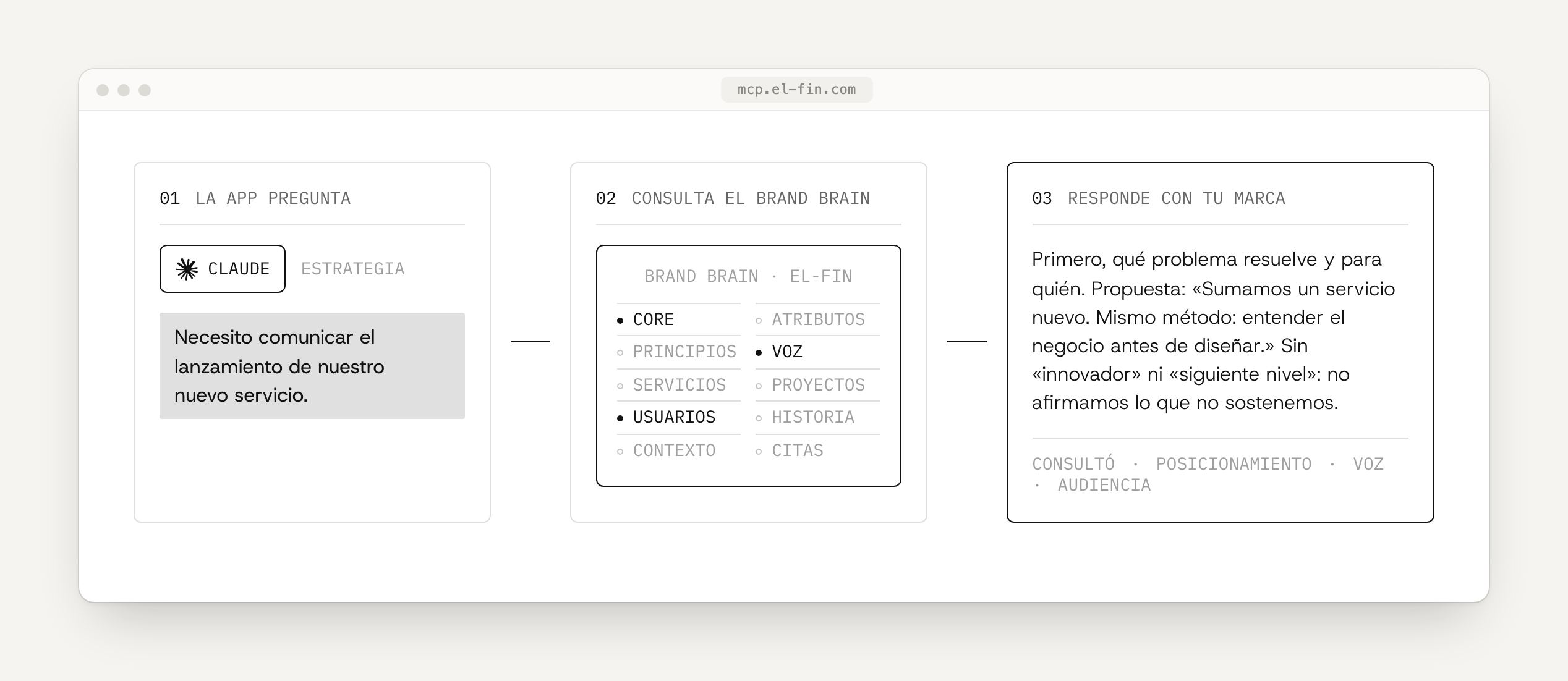
Each brand has one source, written by the studio and organised the way a strategist would: the core, the principles, the voice, the audience, the history, the quotes the brand can actually use. When the brand changes, the source changes, and every tool connected to it changes with it.
the tool asks, the brand answers
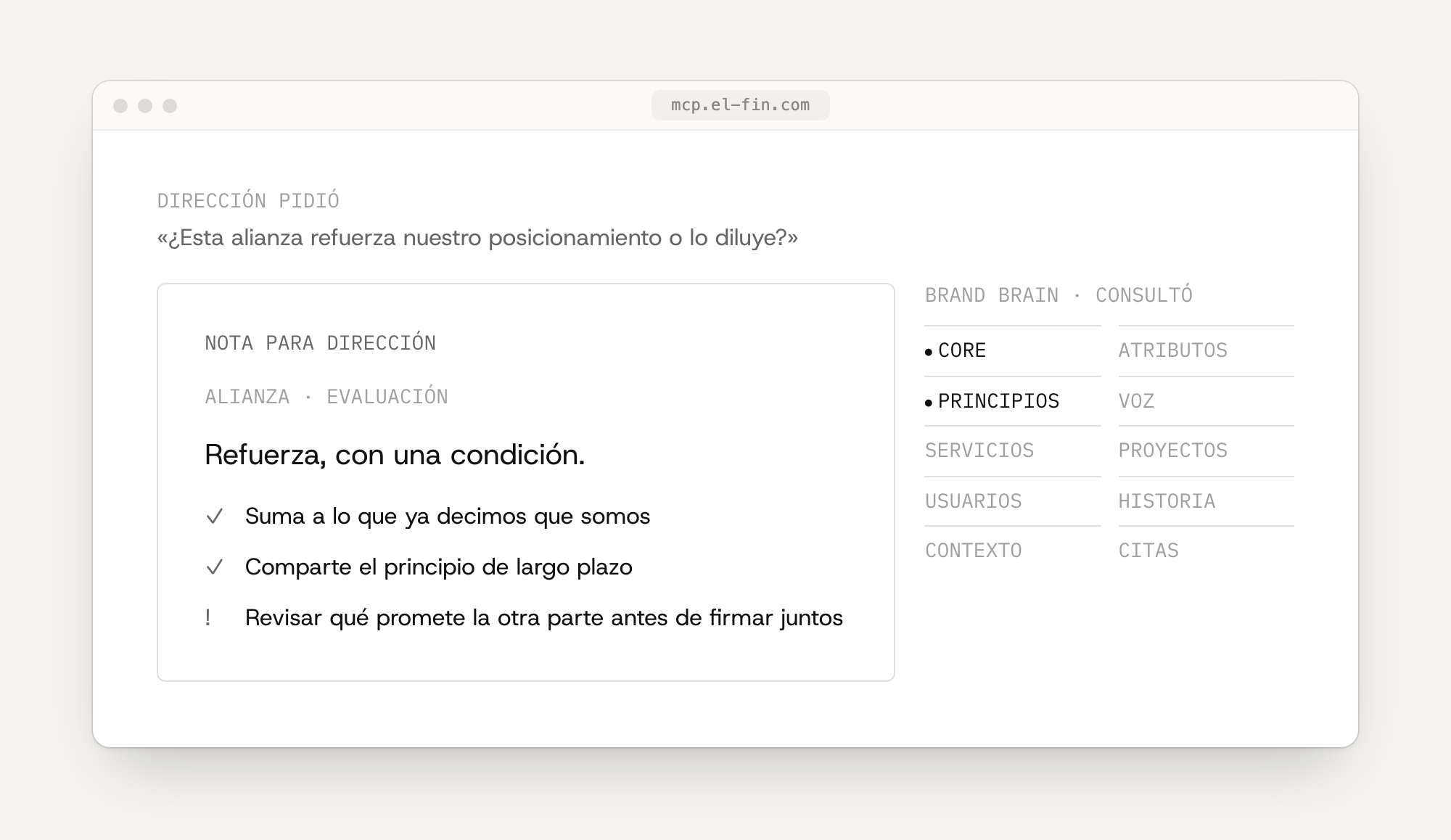
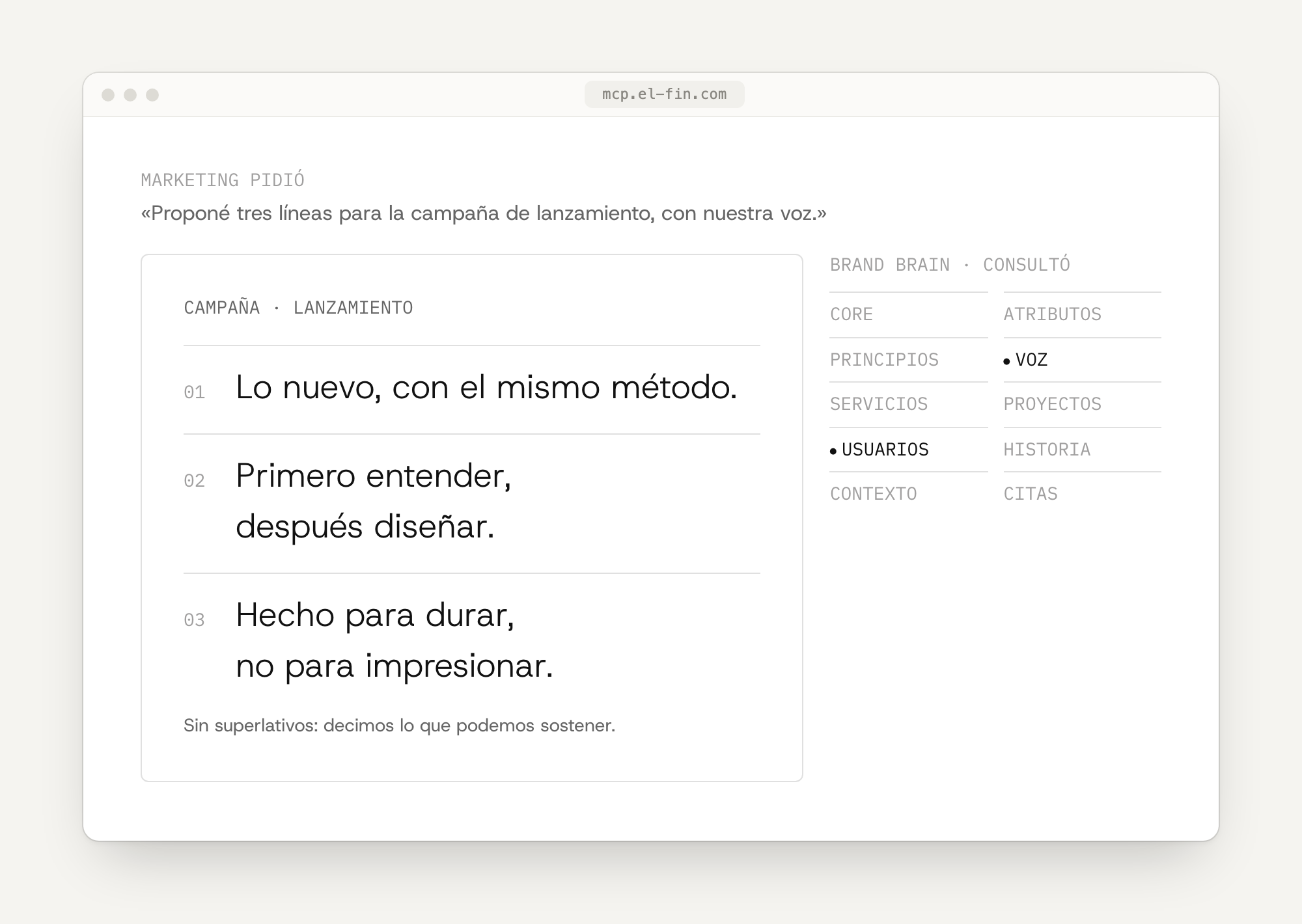
The connector doesn't dump the whole brand into every chat. The AI tool asks for the part it needs: the voice for a post, the history for a founding story, the visual rules for a slide. The answer comes back with the brand's own words and its own limits.
nothing is handed over as a file
A file gets copied, edited, forwarded and forgotten, and after a month there are four versions of the brand. Here the brand stays in one place. Each person on the team connects with their own access, and every call is logged.
it knows what it doesn't know
When a team asks for something the brand doesn't hold (a technical figure, a quote nobody said), the connector is built to leave an honest placeholder instead of inventing one. A brand assistant that makes things up costs more trust than it saves time.
what we've learned
The real lesson is that everything the connector says is interface.
The instructions, every tool description, every line a tool sends back: the model reads all of it and repeats it, sounding sure. One careless sentence in a tool's output turns into a paragraph in a client's post next week. So we stopped treating that text as configuration and started treating it like any other interface we design: prototype it, test it with users, don't ship until it passes.
And because the first users can't be the client, they're synthetic. Scripted people with real jobs and bad moods, run against the connector before a person ever touches it, judged by agents that didn't build it. The thing that wrote the connector never gets to grade it.
evidence
No connector reaches a client team before it goes through our synthetic-users harness. The write-up is in agents are users too: stress-testing ai products with synthetic users: more than 130 scripted conversations over two days, run before the first client's team logged in. That's where it caught a connector selling a client their own logo and an invented founder quote, and hard rules being cut off before the model ever read them.
The rule underneath (a model doesn't get to judge whether the model succeeded) comes from you can't let an agent mark its own homework.
status and limits
Live with its first brands. Each new brand source is written by the studio and tested before release.
It's only as good as the brand strategy behind it, and a model can still ignore what it's told. The same prompt can behave on Monday and misbehave on Tuesday, which is why one passing run proves nothing. That's why every release is tested, not trusted.
what's next
More brands, each with its own synthetic cast built from the people who will actually use it. More of the brand in the source, so design questions get the same grounded answers as writing questions. And the same harness run again on every change, because a connector that passed once can still drift.