CAPSLOCK is an independent AI innovation and design lab. That sentence is easy to say, so here is what it means on an ordinary day.
design is how we ask
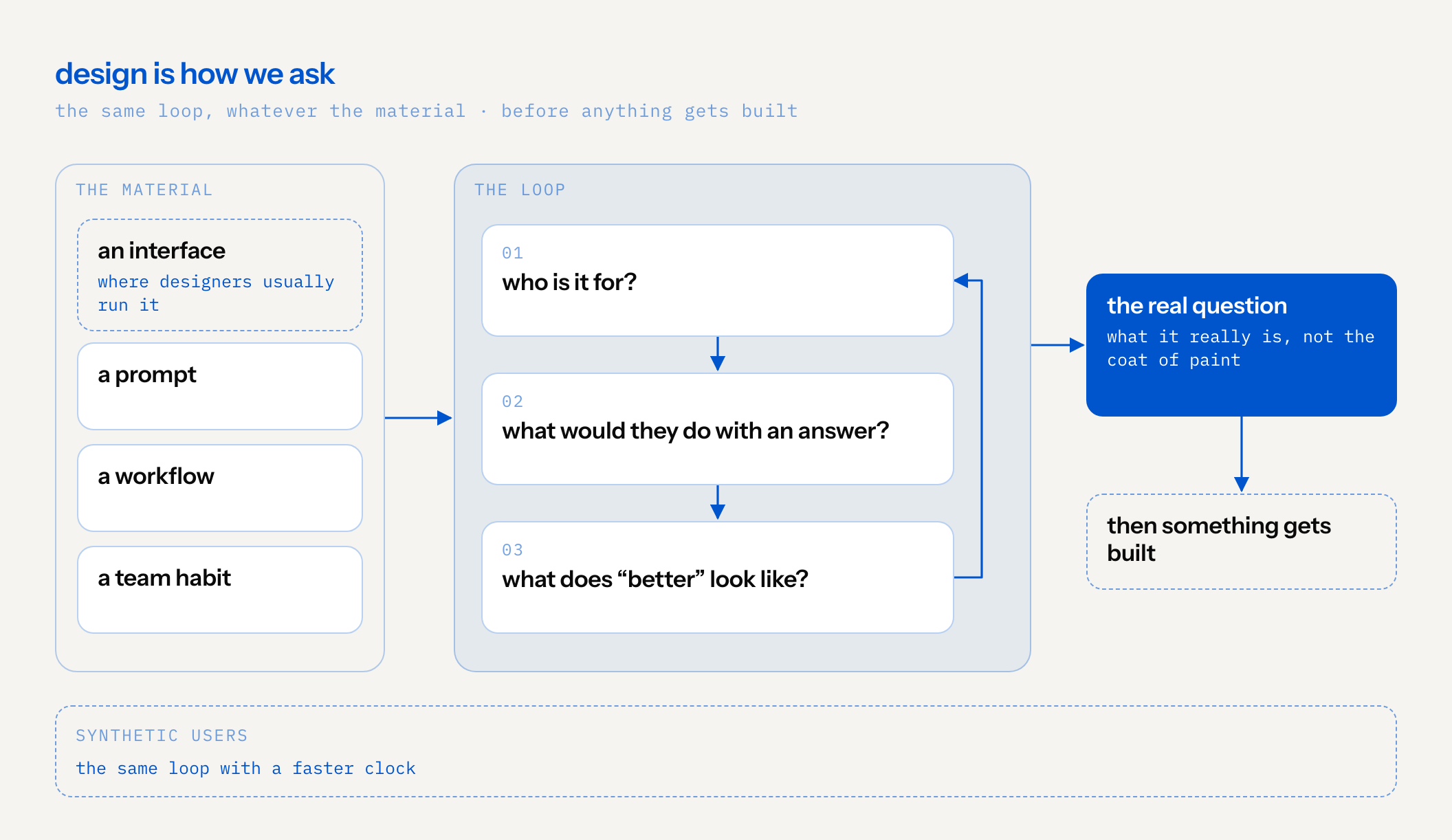
Design isn't the coat of paint at the end. It's how we find out what a question really is: who it's for, what they would do with an answer, what "better" looks like before anything gets built. The loop a designer runs on an interface, we also run on a prompt, a workflow or a team habit. Stress-testing with synthetic users is that loop with a faster clock.
we build to understand
Some questions only answer themselves once something is running. So we prototype early and small, put it inside real work, and watch what it does to the people using it. Nudge started as "how do we remind people about tasks" and only became a question about momentum once it was in use.
we write it down, including what didn't work
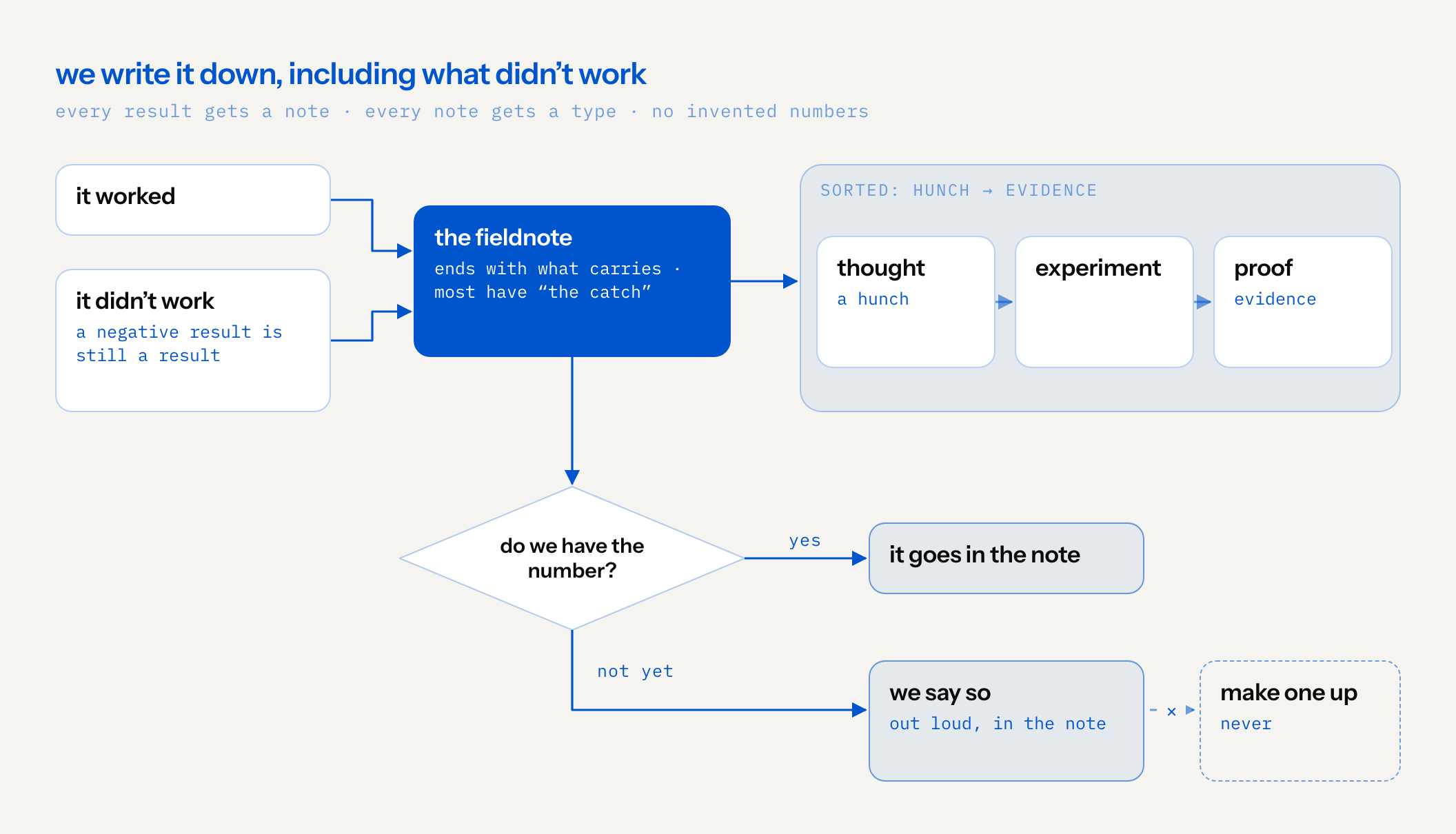
Every fieldnote ends with what carries, and most have a section called "the catch". A negative result is still a result. We sort the notes into thoughts, experiments and proofs so nobody mistakes a hunch for evidence. We don't invent numbers. When we don't have them yet, we say so.
people keep the judgment
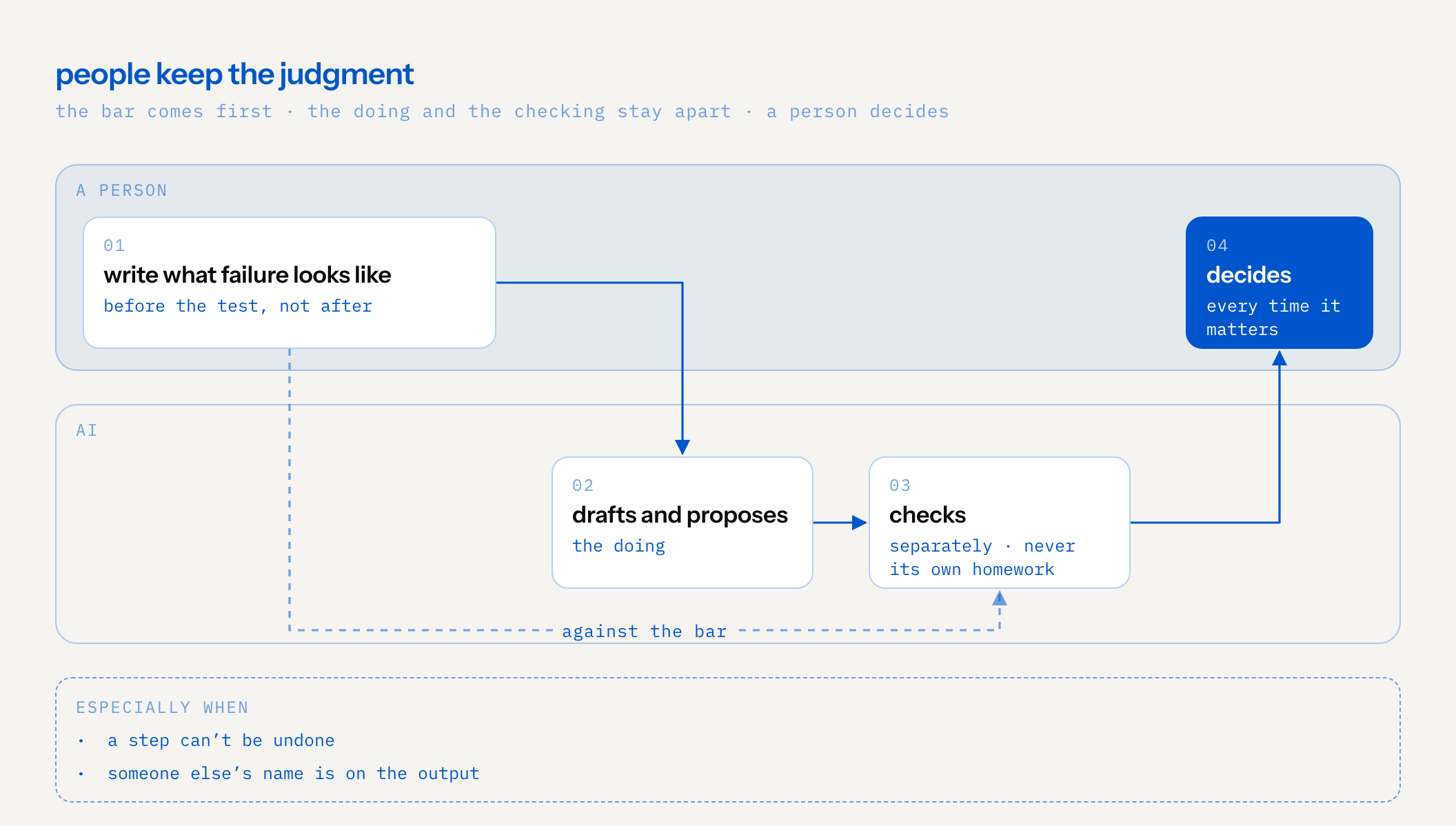
AI drafts, proposes and checks. A person decides, especially where a step can't be undone or someone else's name is on the output. We split the doing from the checking (you can't let an agent mark its own homework), and we write down what failure looks like before the test, not after.
the loop
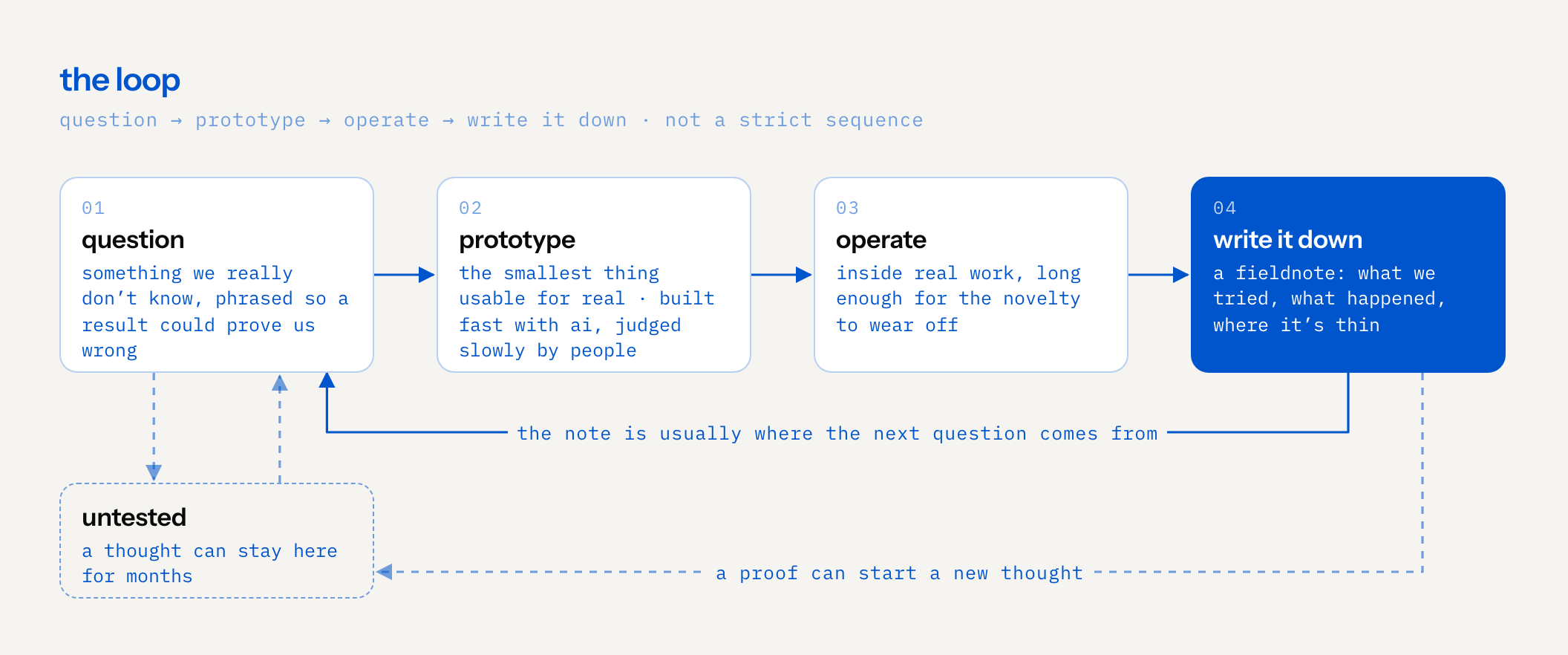
Question → prototype → operate → write it down.
- Question. Start from something we really don't know, phrased so a result could prove us wrong.
- Prototype. The smallest thing that can be used for real. Built fast with AI, judged slowly by people.
- Operate. Run it inside real work, long enough for the novelty to wear off.
- Write it down. A fieldnote: what we tried, what happened, where it's thin. That note is usually where the next question comes from.
It isn't a strict sequence. A proof can start a new thought, and a thought can stay untested for months. It's just the shape most of our work ends up taking.
where from
CAPSLOCK is a Salvadoran company, built from El Salvador. The work itself could happen anywhere. What the place gives us is the setup: a tech law and export incentives that suit a lab like this, overlapping hours with the teams we work beside, and a reason to grow something at home instead of importing the future back at a markup. Why we build from El Salvador has the longer version.
how we use ai
AI is in almost everything we make, this site included. How we use it, where the line stays human, and how we handle data under El Salvador's laws has its own page: ai use.